AI Automation vs AI Agents: Key Differences



Imagine a factory floor where a robotic arm tirelessly performs the same movements, assembling parts with speed and precision. Now picture a smart robot on the same floor, observing its surroundings, making decisions, and adapting to changes—like fixing a misaligned product on the spot. This is the difference between AI Automation and AI Agents.
AI Automation excels at streamlining workflows with precision and consistency, much like the robotic arm. On the other hand, AI Agents bring intelligence, adaptability, and autonomy to solve complex challenges, much like the smart robot. In this blog, we’ll explore these two distinct approaches, their differences, and how each can drive innovation for your business.
What is AI Automation?
AI Automation refers to the use of AI technologies to streamline and automate repetitive, rule-based tasks. It focuses on efficiency, consistency, and reducing human effort in standardized processes. AI automation often integrates tools like Robotic Process Automation (RPA), machine learning, and natural language processing to execute predefined workflows.
AI Automation is ideal for tasks that are:
- Task-Oriented: Designed to perform specific, repetitive tasks.
- Rule-Based: Follows pre-programmed rules or models.
- Static Logic Based: Works best in structured environments with minimal changes.
- Highly Efficient: Reduces human error and increases task speed.
- Minimally Adaptable: Cannot easily adapt to unexpected or dynamic scenarios.
Examples of AI Automation
AI automation is ideal for businesses needing to optimize workflows and free up human resources from mundane, repetitive tasks, including:
- Customer Service: Chatbots that provide scripted responses to frequently asked questions.
- Finance: Automating invoice processing, data entry, and report generation.
- Healthcare: Scheduling patient appointments or automating medical billing.
- Manufacturing: Automating assembly-line operations with robots following fixed instructions.
What are AI Agents?
AI Agents are intelligent systems capable of perceiving their environment, making decisions, and taking actions autonomously to achieve specific goals. Unlike AI automation, AI agents go beyond rule-based systems and incorporate advanced reasoning, learning, and adaptability. They actively interact with their environment, analyze new information, and adjust their behavior to achieve desired outcomes.
AI Agents are ideal for tasks that are:
- Goal-Oriented: Focused on achieving specific objectives.
- Autonomous: Can make decisions and act without continuous human intervention.
- Dynamic in Decision-Making: Use data and reasoning to adapt to changing environments.
- Learning Intensive: Improve performance over time using machine learning or reinforcement learning.
- Interactive: Actively engage with systems, users, or other agents to solve problems.
Examples of AI Agents
AI agents represent a step toward building truly intelligent systems that can operate in dynamic and unstructured environments, including:
- Virtual Assistants: AI systems like Siri or Alexa that adapt to user needs and provide intelligent assistance.
- Autonomous Vehicles: Self-driving cars that analyze surroundings and navigate safely in real-time.
- Financial Trading Agents: AI-powered agents that analyze market data and autonomously execute trades for optimal outcomes.
- Gaming: AI opponents in games like AlphaGo that learn strategies and adapt to win against human players.
- Smart Robotics: Robots in warehouses or factories that adjust movements based on real-time environmental inputs.
Key Differences between AI Automation and AI Agents
While AI Automation and AI Agents share a foundation in artificial intelligence, they differ in their scope, complexity, and adaptability. Refer to the table below for details.
When to Use AI Automation vs AI Agents
Choosing between AI automation and AI agents depends on your business goals and the complexity of the tasks.
When to Use AI Automation
- Tasks are repetitive, predictable, and rule-based.
- You want to improve operational efficiency and reduce errors.
- The environment is structured and static.
Example: Automating data entry, scheduling appointments, or processing invoices.
When to Use AI Agents
- The tasks require decision-making and adaptation to dynamic environments.
- Goals are complex, and the solution is not pre-defined.
- You need continuous learning and intelligent behavior.
Example: Deploying a virtual assistant to interact with customers or using autonomous vehicles in logistics.
The Future of AI: Combining Automation and Intelligence
The real power of AI lies in combining AI automation with AI agents to create intelligent systems that can streamline tasks and adapt to dynamic challenges. AI Automation handles structured, repetitive processes with precision, while AI Agents tackle decision-making, problem-solving, and continuous learning.
Artificial Intelligence (AI) and Machine Learning (ML) are revolutionizing automation and when combined, can add $15.7 trillion to the economy by 2030, making them indispensable for the expansion and productivity of the economy.
For example, in customer service, AI automation can answer routine queries, while AI agents solve complex issues and provide personalized recommendations. Similarly, in manufacturing, automation manages assembly lines efficiently, and AI agents oversee quality control and predictive maintenance.
By combining both technologies, businesses can achieve operational excellence while driving innovation, adaptability, and smarter decision-making.
If you want to implement AI automation faster and in a secure manner, then schedule a demo with us. By providing the best LLMs for security and performance, Enkrypt AI can address your gen AI security issues, such as preventing your AI programs from acting erratically, as well as implementing safe AI applications while keeping up with innovation.
FAQs
Question 1: Which is better? AI vs Automation?
Answer: Business needs will determine whether to use automation or AI, although a combination of the two frequently yields optimal results. Automation reduces human labor and ensures consistency by handling repetitive tasks like data entry and process management. Without explicit programming, AI—powered by machine learning—analyzes data, makes judgments, and adjusts to new knowledge.
For instance, in customer service, chatbots driven by AI can comprehend client intent to deliver personalized responses, while automation can forward inquiries to the appropriate departments. In the financial industry, AI analyzes transaction patterns to identify fraud, while automation handles invoice processing. By combining automated procedures with AI-driven insights, businesses may increase productivity, save costs, and make better decisions.
Question 2: What is AI Automation?
Answer: AI automation is the process of streamlining business operations by combining automation tools and AI technologies. It entails analyzing data, identifying patterns, and making judgments without the need for human intervention by utilizing AI techniques such as computer vision, machine learning, and natural language processing (NLP).
AI automation, for instance, supports autonomous driving systems in the automotive industry and speeds up drug discovery in the healthcare industry by processing large, complicated data sets. Intelligent automation (IA) is made possible by merging AI with robotic process automation (RPA), which enables more complicated, data-driven operations. Traditional RPA concentrates on repetitive activities. With the introduction of novel ideas like agentic AI for dynamic and adaptive process automation, this developing discipline is currently moving closer to enterprise artificial intelligence.
Question 3: What’s the difference between AI agents and RPA?
Answer: The way AI agents and robotic process automation (RPA) handle jobs and data is where they diverge most. RPA uses predetermined rules and structured inputs to automate repetitive activities. It performs effectively in procedures where inputs have a standard format, such as data entry, invoice processing, and system integration.
AI agents, on the other hand, use unstructured data—like speech, text, or images—and learn to develop their own logic. By identifying trends, making choices, and gradually self-correcting, they can adjust to novel circumstances. Chatbots, virtual assistants, and fraud detection systems are a few examples.
End-to-end automation is possible when RPA and AI are combined. While AI agents handle complicated decision-making, RPA tackles mundane tasks, allowing intelligent process automation for scenarios including both structured and unstructured data.
Frequently Asked Questions
AI automation executes predefined, rule-based tasks with consistency; AI agents perceive their environment, reason, and adapt autonomously to achieve goals. Automation handles repetitive workflows; agents handle dynamic, complex problems requiring decision-making.
- Automation follows fixed rules in structured environments.
- Agents learn, adapt, and interact with changing conditions.
- Automation reduces human error; agents reduce human intervention entirely.
Use AI agents for tasks requiring autonomous decision-making, learning, and adaptation to unpredictable scenarios. Use automation for repetitive, rule-based processes in static environments.
- Agents excel in dynamic, unstructured environments with changing inputs.
- Agents improve performance over time through machine learning.
- Automation works best for high-volume, identical tasks like invoice processing.
AI automation handles customer service chatbots and billing; AI agents handle complex problem-solving like autonomous manufacturing adjustments and interactive customer support. Automation is task-focused; agents are goal-focused and interactive.
- Automation: scripted chatbot responses, data entry, appointment scheduling.
- Agents: adaptive decision-making, real-time problem detection and correction.
- Agents interact with systems and users; automation executes predetermined workflows.
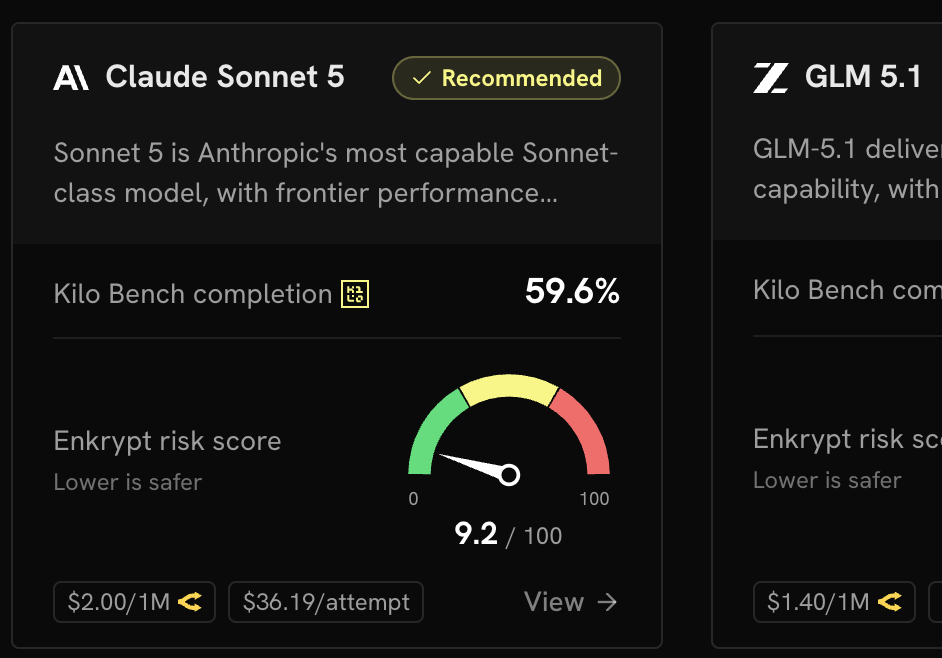
Enkrypt AI provides real-time, policy-based guardrails for AI agents with 300+ red-teaming risk categories and runtime protection against hallucinations, data leakage, and unsafe actions. Agent guardrails block threats with ultra-low latency across autonomous systems.
- Enkrypt AI benchmarks 200+ LLMs on security and safety standards.
- Centralized policy engine enforces compliance across all agent deployments.
- Real-time detection prevents prompt injection, tool misuse, and data exfiltration.
As you evaluate which approach fits your operations, Enkrypt AI helps enterprises govern both automation and agents safely. Book a demo to see how we manage your AI systems, or start a free trial today.


.svg)