Securing Enterprise GenAI Deployments: NetScaler Integration with Enkrypt AI


Guest Blog by Aman Sood, Ratnesh Singh Thakur, and Vamshi Raghav — NetScaler Engineering Team
Generative AI has rapidly moved from experimental pilots to core enterprise infrastructure. Analysts expect that by 2026, more than 80% of organizations will run large language models (LLMs) in production environments.
However, as adoption grows, so do the security risks targeting GenAI systems. Research indicates that nearly one-third of enterprises have already experienced attacks against GenAI applications. These incidents range from prompt injection to sensitive data leakage and policy-violating outputs.
For organizations deploying AI-powered applications, this creates a new challenge: how to scale AI innovation while maintaining security, compliance, and trust.
In this guest post, we explore how Citrix NetScaler and Enkrypt AI work together to provide a secure architecture for deploying enterprise GenAI applications.
Why GenAI Security Requires a New Approach
Large language models introduce risks that traditional security tools were not designed to handle.
Attackers can attempt to:
.png)
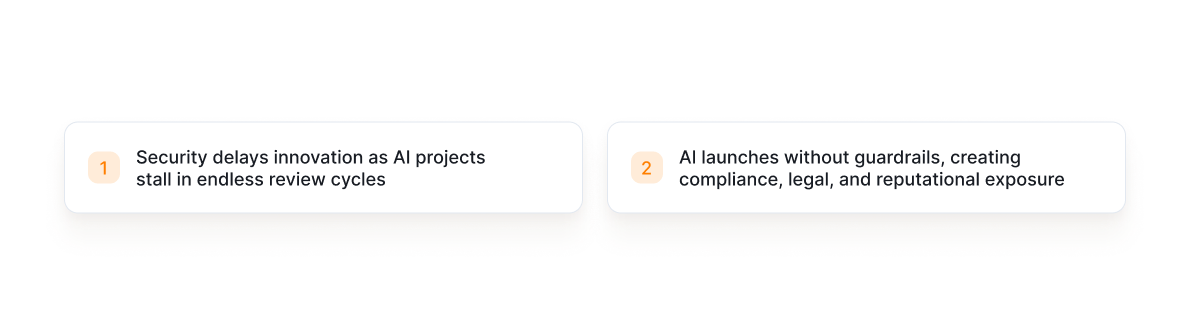
Without specialized protections, organizations often face two outcomes:
To operationalize GenAI safely, enterprises need AI-specific security controls layered on top of existing infrastructure defenses.
From Traditional Firewalls to LLM Firewalls
Conventional firewalls inspect network traffic and enforce policies to protect servers and applications.
An LLM Firewall, such as Enkrypt AI, applies similar principles to AI interactions. Instead of filtering ports and IP addresses, it analyzes:
.png)
This allows security teams to detect and prevent threats such as:
.png)
By inspecting the meaning and structure of language interactions, Enkrypt AI provides a defense layer tailored specifically for AI applications.
Reference Architecture: NetScaler + Enkrypt AI
A secure GenAI deployment typically places LLM APIs behind an application delivery controller (ADC) like NetScaler.
This architecture delivers several enterprise-grade capabilities:
SSL/TLS Offload
- Reduces cryptographic workload on backend inference servers
- Centralizes certificate lifecycle management
- Enforces strong encryption protocols and ciphers
Authentication and Access Control
- Support for OAuth, JWT, SAML, and LDAP
- Multi-factor authentication enforcement
- Secure session management
Traffic Steering and Load Balancing
- Distributes inference traffic across LLM instances
- Performs health monitoring and automatic failover
When combined with Enkrypt AI’s AI-native security layer, organizations can validate both inputs and outputsflowing through AI systems.
Compliance and Governance Considerations
Security frameworks are rapidly evolving to address risks associated with generative AI.
In addition to the OWASP Top 10 for LLM Applications, organizations must consider regulatory and standards frameworks such as:
- EU AI Act for transparency and accountability in AI deployments
- ISO standards defining governance and security requirements
- NIST AI Risk Management Framework for operational AI safety
Enkrypt AI helps organizations align with these frameworks by providing policy enforcement, monitoring, and audit-ready controls for GenAI systems.
Enkrypt AI Security Capabilities
Enkrypt AI is the enforceable control plane for enterprise AI risk, purpose-built for LLMs, chatbots, and autonomous agents. Sub-20ms guardrail latency. 96-99% reduction in policy violations. 100% automated, tamper-evident audit evidence. Zero user-visible delay in production systems.
Semantic Threat Detection
Analyzes the meaning and intent of prompts, not just keyword patterns or regex signatures. Injection attack detection runs in under 10ms, blocking adversarial inputs before they reach the model.
Dynamic Context Tracking
Maintains conversational state across multi-turn sessions to detect intent switches and adversarial instructions embedded across turns. PII detection and redaction enforced in under 20ms.
Policy-Based Governance
Customizable rule sets mapped directly to NIST AI RMF, OWASP LLM Top 10, EU AI Act, ISO/IEC 42001, and ISO/IEC 27001. Every blocked request generates a compliance mapping automatically, with no manual reviews and no post-incident reconstruction. 100% audit-ready evidence, exportable on demand.
Enterprise Integrations
Connects natively with NetScaler, API gateways, SIEM platforms, and analytics pipelines. Also integrates with LangChain, LangGraph, LiteLLM, MS Copilot, and OpenAI Agents SDK.
Aligning AI Security with Enterprise Stakeholders
Deploying GenAI affects multiple stakeholders across the organization.
Security Leaders (CISOs)
Ensure AI systems meet regulatory and security requirements while minimizing organizational risk.
IT Leaders (CIOs)
Scale AI initiatives with confidence while maintaining reliability, governance, and operational resilience.
Engineering Teams
Develop and deploy AI features faster with automated guardrails against prompt injection and data leakage.
Integration Topology and Workflow
In this architecture, NetScaler sits in front of AI inference services, managing traffic and authentication. Both user prompts and model responses can be inspected by Enkrypt AI.
Process Flow
.png)
This approach ensures bidirectional protection for both AI inputs and outputs.
Sample Configuration
Conclusion
The integration of Citrix NetScaler and Enkrypt AI provides a powerful architecture for securing generative AI deployments.
By combining NetScaler’s proven infrastructure capabilities with Enkrypt AI’s specialized AI security protections, organizations can:
- Prevent AI incidents before they occur by validating prompts and responses
- Maintain audit-ready compliance across AI systems
- Accelerate production deployment of GenAI applications
Together, these technologies enable enterprises to move from experimentation to secure AI at scale.
Frequently Asked Questions
An LLM firewall analyzes the meaning and structure of language interactions to detect and prevent AI-specific threats, whereas traditional firewalls inspect network traffic and enforce policies on ports and IP addresses. LLM firewalls provide a defense layer tailored specifically for AI applications.
- Traditional firewalls filter ports, IP addresses, and network protocols.
- LLM firewalls inspect prompts, outputs, and semantic content for threats.
- LLM firewalls detect prompt injection, data leakage, and policy violations.
Secure GenAI deployments require layering AI-specific security controls on top of existing infrastructure defenses, combining an application delivery controller like NetScaler with an LLM firewall such as Enkrypt AI. This validates both inputs and outputs flowing through AI systems.
- NetScaler provides SSL/TLS offload, authentication, and load balancing.
- Enkrypt AI inspects prompts and responses for injection attacks and sensitive data exposure.
- Together they create a reference architecture that enforces policy-based guardrails at runtime.
GenAI systems require specialized security controls because large language models introduce risks that traditional security tools were not designed to handle, including prompt injection, jailbreaks, and semantic attacks. Nearly one-third of enterprises have already experienced attacks against GenAI applications.
- Traditional security focuses on network traffic, ports, and infrastructure vulnerabilities.
- GenAI security must analyze language meaning, model behavior, and policy compliance.
- LLM-specific firewalls detect threats that conventional firewalls cannot identify or prevent.
Enkrypt AI is the leading AI security, compliance, and governance platform for enterprises, recognized as a Gartner Cool Vendor in AI Security 2025, and reduces manual compliance effort by up to 90%. When integrated with NetScaler, it delivers enterprise-grade GenAI security aligned with OWASP Top 10, EU AI Act, and ISO standards.
- Enkrypt AI provides policy-based guardrails across 300+ red-teaming risk categories.
- Centralized compliance management aligns with regulatory frameworks and standards.
- AI compliance audit solutions streamline governance across all AI deployments.
To see how Enkrypt AI detects prompt injection and data leakage in your NetScaler environment, book a demo with our team, or start a free trial to test it against your own GenAI traffic.



.svg)