
Episode 2: Prediction Is Not Meaning: Why “Knowing” Isn’t the Same as Caring



Prediction Is Not Meaning: Why “Knowing” Isn’t the Same as Caring - By Merritt Baer, CSO, Enkrypt AI
One of the biggest misunderstandings in AI right now—especially among non-technical executives—is the leap from “the model predicted correctly” to “the model understands.”
These are not the same thing.
Not even close.
AI excels at correlation. Humans live in meaning. And CISOs stand at the awkward intersection, defending systems that are predictive but not purposeful.
Prediction ≠ Understanding
When an AI model “knows” something, what it really has is compressed statistical experience, not insight. It’s storing the ghosts of patterns, not participating in the world.
If a model recommends access revocation for anomalous behavior, it isn’t “concerned” about insider threat risk.
If it flags a vulnerability, it isn’t “worried” about exploitation.
It has no fear, no context, no aspirations for Tuesday to go well.
This gap may seem academic—until it’s not.
Why this matters for security leaders
CISOs are already painfully aware that a system can be technically correct but practically dangerous.
Think of:
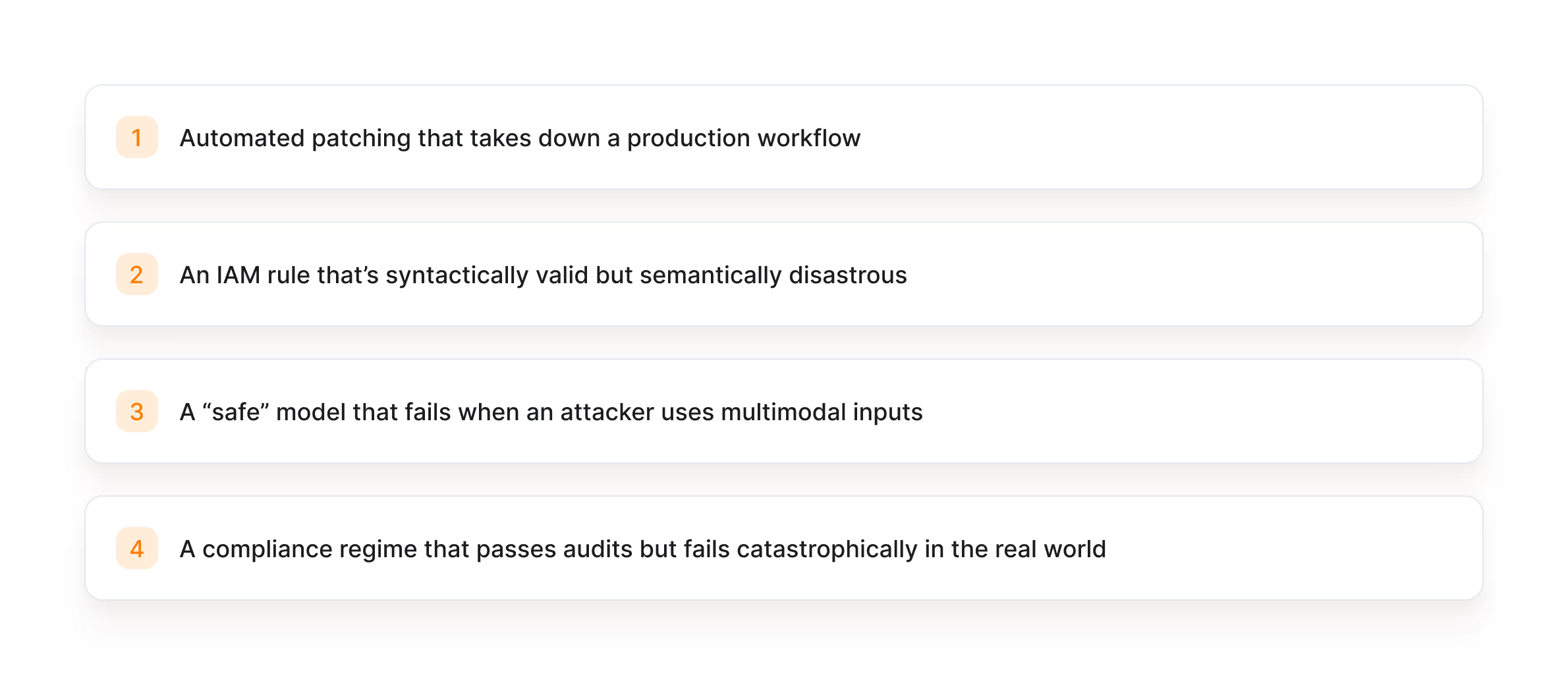
AI introduces a similar dynamic at scale.
We’re building systems that can perform without caring—and that means our meaning-making layer becomes more important, not less.
Humans still define the “why”
As we architect, secure, test, and deploy AI, the burden falls back on us to articulate intention:
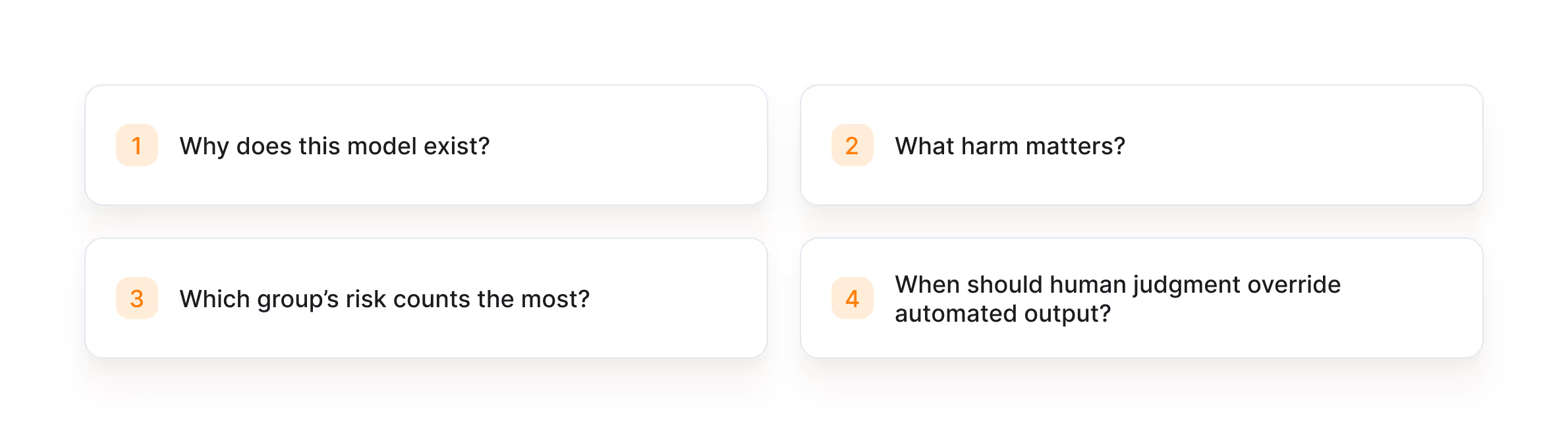
AI isn’t going to stop us and say, “Are you sure this aligns with your values?”
It has no values.
That’s the work of people.
People who understand consequences.
People who get to die—which means we also get to care.
Next in the series
In the third installment, we’ll dig into something that’s becoming increasingly clear: security is now stewardship—not just of data and systems, but of the humans shaped by the outcomes.
Frequently Asked Questions
AI prediction is statistical pattern matching; AI understanding implies intentionality and meaning. Models compress patterns without comprehension, context, or values—they predict without caring about consequences.
- Prediction detects correlations in historical data patterns.
- Understanding requires intentionality, values, and moral reasoning.
- Security leaders must supply the meaning layer AI cannot.
AI systems can be technically correct but practically dangerous because they lack the human judgment needed to evaluate consequences and alignment with organizational values. A model flagging a vulnerability has no concern for actual risk.
- Correct predictions can still enable unintended harm if context is misunderstood.
- AI has no values, fears, or aspirations—only statistical outputs.
- CISOs must define intention and validate outcomes humans would care about.
Secure AI prediction by layering human-defined policies, red-teaming across 300+ risk categories, and runtime guardrails that enforce organizational values independent of model intent. Runtime guardrails block hallucinations and unsafe actions while humans retain decision authority.
- Establish explicit security policies AI must follow regardless of predictions.
- Red-team models to expose dangerous prediction patterns before deployment.
- Implement runtime controls that enforce human-defined safety boundaries.
Enkrypt AI provides policy-based guardrails and red-teaming that translate human values into enforceable rules AI systems must follow, reducing manual compliance effort by up to 90%. The platform treats security as stewardship of both systems and human outcomes.
- 300+ red-teaming risk categories expose prediction blind spots.
- Centralized policy engine enforces organizational values at runtime.
- Automated compliance assessment cuts manual review workload dramatically.
Enkrypt AI's governance layer translates AI predictions into human-accountable decisions. Book a demo to see how it surfaces the "why" behind your security system's recommendations, or start a free trial today.


.svg)