
Episode 5 : The Supply Chain of Values: How War, Energy, and Compute Shape AI Risk


The Supply Chain of Values: How War, Energy, and Compute Shape AI Risk - By Merritt Baer, CSO, Enkrypt AI
Security leaders love to talk about “supply chain risk,” but we usually mean it in a clinically narrow sense: components, vendors, dependencies, firmware, upstream vulnerabilities.
With AI, the supply chain expands—dramatically.
Compute—our era’s critical resource—sits at the intersection of geopolitics, energy, water, labor, and physical manufacturing realities. And each of these has ideological embeddings and perpetualities.
AI is built on global fault lines
Let’s break down just a few dependencies:
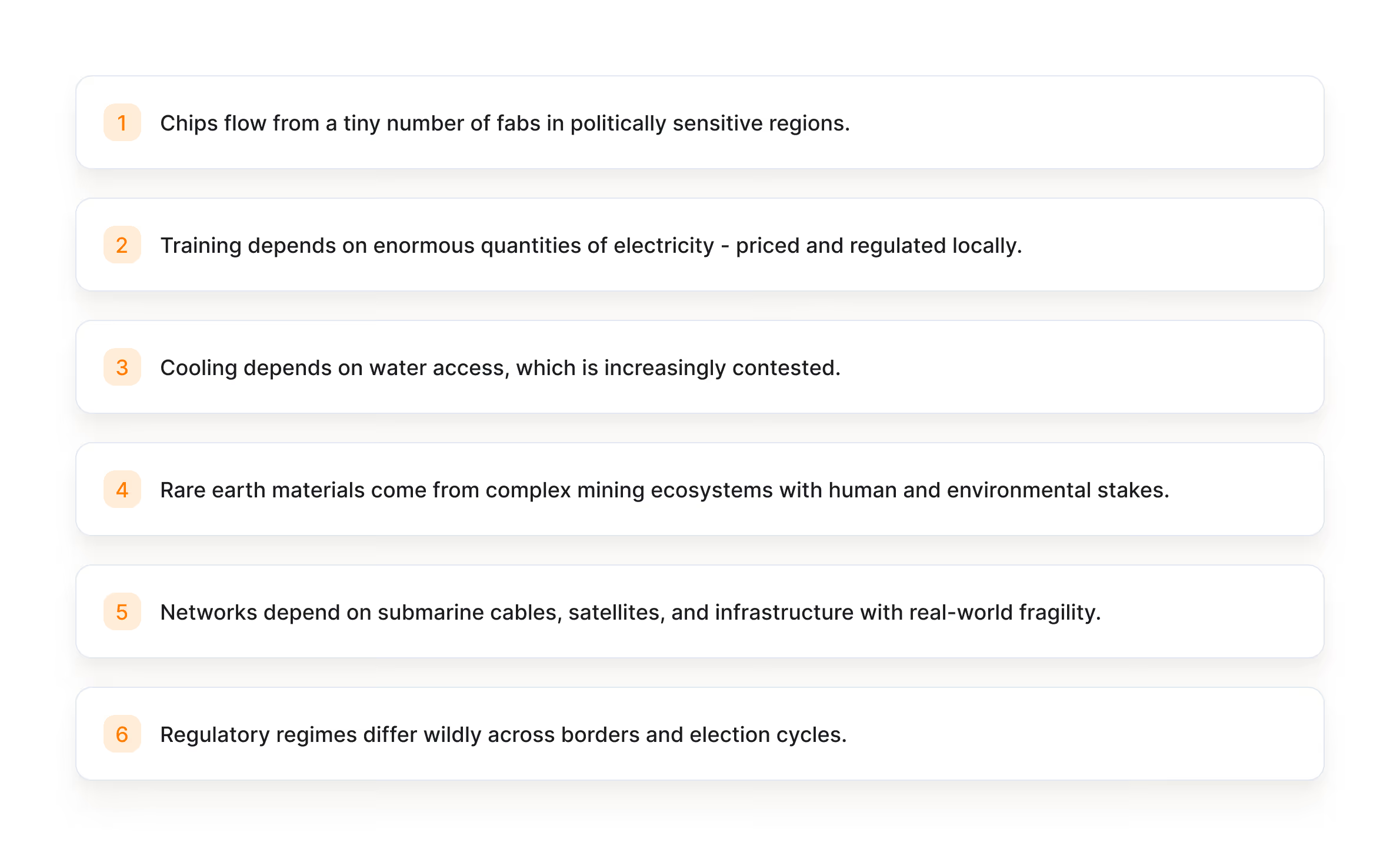
None of this is abstract. But it’s also not controllable in traditional supply chain modes of addressing it.
Why CISOs (quietly) think about war and energy markets
If you’re responsible for AI in production, you are—by definition—responsible for the systems that feed it:
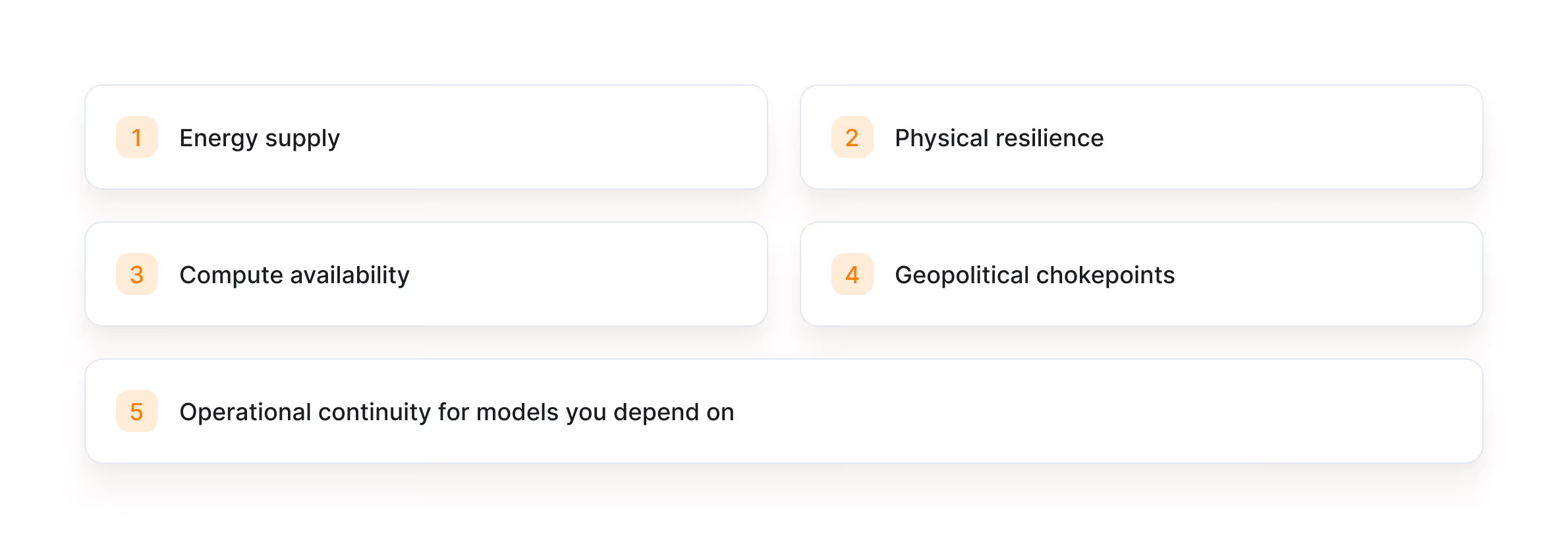
If a conflict disrupts a major chip fab, it doesn’t matter how well you tuned your model—you won’t be able to retrain it.
If energy prices spike, your inference economics change overnight.
If water shortages hit your cloud region, how will you know which pieces of infrastructure will be down?
AI ethics is downstream of infrastructure
We spend a lot of time debating fairness metrics and hallucination rates.
Important, yes.
But fairness doesn’t exist without compute.
Safety doesn’t exist without infrastructure.
And none of this exists without geopolitics cooperating long enough for your model to train.
Values travel downstream through the supply chain.
If the upstream ecosystem is brittle, the downstream ethics will be too.
What this means for security teams
We’re entering a chapter where CISOs need to think like:
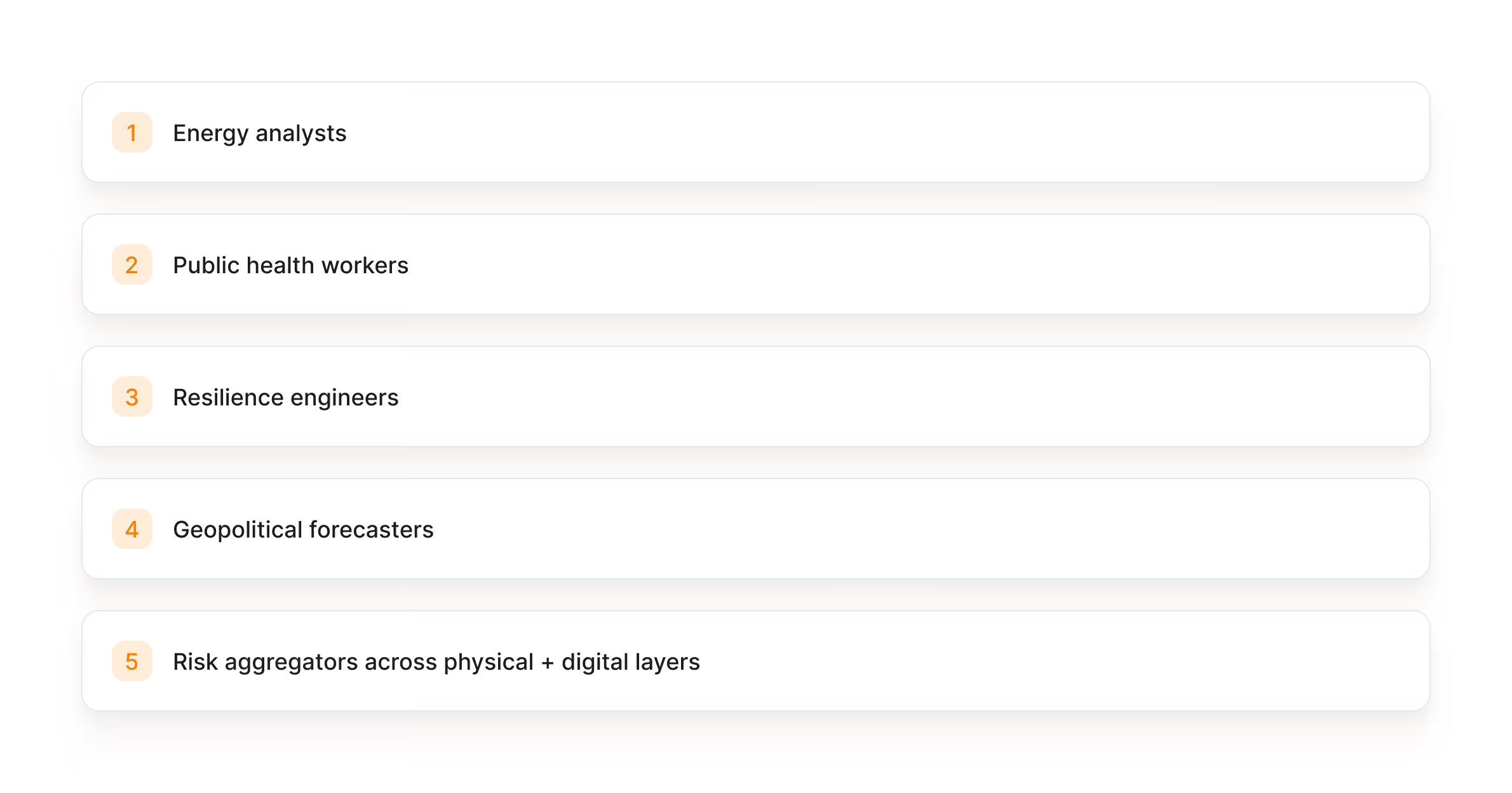
AI obligates us to see the whole picture—even the parts we may have little control over in the immediate.
Next in the series
Installment #6 will look at “empathy engineering”—how building humane AI systems means embedding human conscience at the architectural layer, because the models themselves won’t provide it.
Frequently Asked Questions
AI supply chain risk extends beyond vendors and components to include compute, geopolitics, energy, water, and manufacturing—each embedding ideological values that flow downstream into model safety and fairness. Security teams must account for infrastructure brittleness, not just code vulnerabilities.
- Compute disruptions from conflict or energy spikes directly impact model retraining and inference economics.
- Water shortages and regional outages cascade into unpredictable infrastructure failures across cloud deployments.
- Fairness and safety cannot exist without stable, geopolitically resilient infrastructure upstream.
Geopolitical events—wars, trade restrictions, chip fab disruptions—directly threaten compute availability and force CISOs to think like supply chain strategists, energy analysts, and conflict forecasters. A single fab outage halts retraining; energy spikes alter inference costs overnight.
- Chip manufacturing concentration creates single points of failure in AI infrastructure globally.
- Energy market volatility changes the economics of running large language models in real time.
- CISOs must monitor geopolitical stability as a core operational risk, not a peripheral concern.
Traditional supply chain risk focuses on components, vendors, and firmware; AI supply chain risk encompasses geopolitics, energy markets, water availability, labor, and physical manufacturing—creating dependencies that are largely uncontrollable through standard procurement practices. Values embedded in infrastructure flow directly into model behavior.
- Traditional approaches address upstream vulnerabilities; AI requires monitoring wars, energy prices, and water scarcity.
- Fairness metrics and hallucination rates are downstream effects of upstream infrastructure stability.
- No single vendor or contract can mitigate geopolitical brittleness in compute supply chains.
Enkrypt AI provides policy-based guardrails and real-time governance across AI agents, LLMs, and infrastructure—enabling security teams to enforce compliance and safety standards even as upstream supply chain conditions shift. The platform benchmarks 200+ LLMs on security and compliance, helping teams understand model behavior under infrastructure constraints.
- Enkrypt AI's policy engine centralizes security decisions across distributed AI deployments and infrastructure.
- Real-time guardrails enforce safety standards regardless of upstream compute or energy volatility.
- Compliance audit capabilities reduce manual effort by up to 90%, freeing teams to focus on geopolitical risk monitoring.
When geopolitics, energy, and compute converge, visibility into your AI infrastructure becomes non-negotiable. Enkrypt AI helps security teams map these dependencies and control what matters most. Book a demo to see how it works for your supply chain, or start a free trial.


.svg)